

Tips For Physician Real Estate Owners During The COVID-19 Pandemic

In the midst of the worldwide epidemic caused by COVID-19, many medical real estate owners have been struck with requests from tenants they no longer control to defer rent for April.

This can be alarming for physician real estate owners as it’s uncertain when elective procedures and non-essential medical services will resume. Will a tenant ask to defer rent in May also? June? These landlords aren’t always seasoned investors; they’re physicians who are feeling pressure from large, sophisticated business entities – all the while, they have mortgages and overhead to cover.

As a real estate owner who no longer has control of your tenant, it’s important to understand that you have only a few opportunities to exit your real estate investment.  In order to sell at a premium, you need desirable lease terms. These include market rents, a long term (10+ years) NNN (“triple-net”) lease, attractive rental escalations, and other more nuanced details that can make or break your lease.  Many physician landlords have a non-salable property because of the length of their lease term; few investors would pay a premium for real estate that has the potential for inconsistent cashflow, even in our thriving metroplex.

Just as you’re not inclined to defer your tenant’s rent, your tenant is typically not inclined to make changes to their lease. While there are few occasions in a landlord-tenant relationship where the lease can be re-negotiated, COVID-19 seems to have opened a window of opportunity. Whether your long-term objective is to hold or sell  your real estate, there are solutions that benefit both parties.

As an example, many leases feature renewal options that provide the tenant short, 5-year increments by which they can extend their lease. As mentioned earlier, if a lease has fewer than 10 years of remaining term, it will be challenging to achieve a premium value in a sale.  If your tenant requested you defer their rent, you could counter that they exercise one of these renewal options in exchange.

For a health system or management services organization who has invested in the business and facility for the long-term, this should not be an issue. At the same time, this adds significant value to you as the landlord because your facility now has a longer lease term. Not only does your real estate now have more security and liquidity, but it can also be sold at a premium value.  Most importantly, you created a solution that is mutually beneficial to you and your tenant during these challenging times.

The uncertainty from COVID-19 can be daunting for physician real estate owners who depend on rental payments from their management partner. Fortunately, there are creative solutions that facilitate collaboration and continuity of operations until our community regains a sense of normalcy.


Source: D Magazine
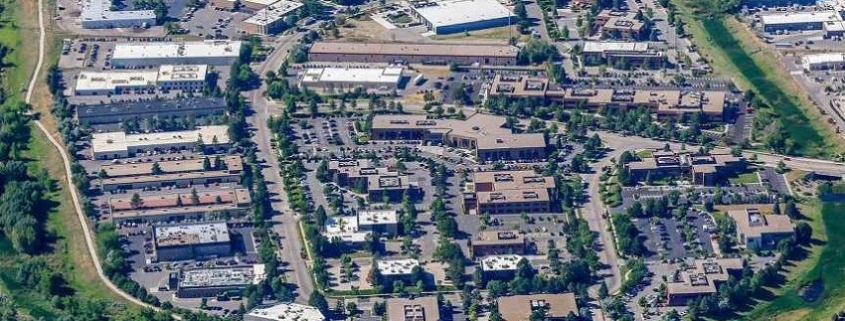
Baptist Health Buys Land For A Medical Massive Campus In St. Johns County

Baptist Health purchased 11.3 vacant acres in St. Johns County on March 23 for $5.7 million and abuts a 23.3-acre parcel Baptist bought for $5.8 million in July.

The use allowances for Baptist‘s newest property restrict construction to a 150,000-square-foot medical campus, but a February request to change the property’s allowances would let Baptist build a hospital twice that size.


Click here to read more about this story.


Coronavirus Could Push Jacksonville Into Becoming A Life Science Cluster

North Florida could benefit from future research related to the coronavirus.

Michael Brown, senior director for office services for Colliers International in Jacksonville, who is a life sciences CRE specialist, believes clusters will continue to develop around the University of Florida and Alachua and around the Mayo Clinic in Jacksonville.

“There are some very talented people in this region at the Mayo Clinic and the University of Florida, as well as some world-class contract manufacturing operations in Alachua,” Brown tells GlobeSt.com. “There will be companies seeking out their help, particularly in a time like this. I can also see other contract manufacturers and contract research groups giving North Florida serious consideration for expansion. Companies are being funded and good science is finding its way into labs. There are positive developments that offer promise. We are going to see a lot of push and pull. If this goes on for a much longer period of time than anyone hopes, I think there will be more detrimental issues and things that are unforeseen such as supply chains collapsing. But there is a silver lining out there as well. The science developed recently over the last two years has been way ahead of the innovation curve in terms of discovery. Manufacturing processes are getting better. The science itself, even if it is postponed or interrupted, will still be good science when it’s sitting on the shelf and not doing anything for a while.”

The country’s main life science clusters are well-established-Boston, San Francisco, San Diego and North Carolina’s Research Triangle—but there are secondary markets that are slowly gaining density and Brown asserts that Jacksonville has the foundation to become a small cluster. He cites land availability, transportation infrastructure and science coming out of the region’s universities.

“The academic underpinning is essential and it bodes well for Jacksonville,” Brown says.

Many challenges lie ahead, but Brown is optimistic that the life sciences sector in the US has the building blocks in place.

“My feeling is that when this does end, that ramping back up in pursuit of this science is going to be difficult and will require funding and new regulations, but it can be done and it’s not as though we’ve had companies out there failing in what they are pursuing,” Brown says. “I don’t want to say we will pick up right where we left off, but this particular industry will bounce back and it will bounce back with lessons learned along the way that will be very much process oriented.”


Source: GlobeSt