
Why Limited Medical Office Supply Is Creating New Development Opportunities
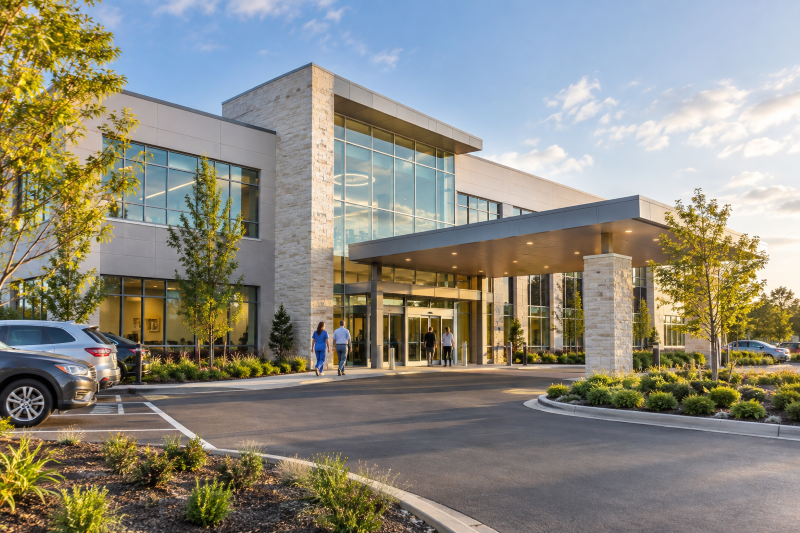
The supply of new medical outpatient space is tightening at a time when demand for healthcare real estate remains resilient, creating a more challenging environment for providers searching for well-located, modern facilities.
CBRE projects medical outpatient building construction completions will decline 26% in 2026, falling to their lowest level in more than a decade. At midyear, the national medical outpatient vacancy rate stood at 9.8%, while the availability of high-quality medical space remained constrained by elevated construction and financing costs.
For healthcare systems and physician groups planning for long-term growth, those conditions are increasing the importance of thoughtful development strategies and facilities designed specifically around healthcare delivery.
Outpatient Demand Continues Despite Limited New Supply
Healthcare delivery has steadily moved beyond the traditional hospital campus as more procedures, diagnostics and specialty services are provided in outpatient settings.
That shift continues to support demand for medical outpatient buildings. During the second quarter of 2026, the sector recorded 1.18 million square feet of positive net absorption, marking the fifth consecutive quarter of positive demand. Across the 59 U.S. markets tracked by CBRE, only 2.7 million square feet of medical outpatient space was under construction at the end of the quarter.
The relatively limited development pipeline means healthcare providers may face fewer choices when searching for space that meets both their location and operational requirements.
CBRE expects the national medical outpatient vacancy rate to finish 2026 at approximately 9.7%, with nine tracked markets projected to end the year below 6% vacancy.
Medical Space Has Specialized Requirements
Medical facilities often demand far more from a building than a conventional office user.
Depending on the specialty, providers may require enhanced electrical capacity, specialized plumbing, upgraded HVAC systems, backup power, medical gas infrastructure, imaging accommodations or structural improvements.
Parking and patient circulation are equally important. A healthcare facility may generate a steady flow of patients, employees and visitors throughout the day, making convenient access, adequate parking and efficient drop-off areas critical components of site planning.
Those requirements can make purpose-built medical facilities particularly valuable because design decisions can be made around the needs of the healthcare user from the beginning.
Location Is Increasingly Important
Healthcare providers are also placing greater emphasis on bringing services closer to the communities they serve.
CBRE reports that population growth in Sun Belt states including Florida, Texas, Arizona, North Carolina and Georgia is supporting demand for outpatient healthcare real estate across multiple age groups, not simply among retirees.
That demographic growth is creating opportunities for healthcare systems and physician groups to establish outpatient locations in expanding residential markets where patients increasingly expect convenient access to care.
For developers, identifying sites near major population centers, transportation corridors and complementary healthcare services can play an important role in the long-term success of a medical facility.
Purpose-Built Development Can Support Long-Term Operations
Existing buildings can sometimes be adapted for healthcare use, and conversions have become one tool for addressing the shortage of medical space.
However, adaptive reuse is not always the most efficient solution.
A building that was originally designed for retail or conventional office use may require substantial modifications to accommodate healthcare operations. Mechanical systems, structural capacity, parking ratios and floor layouts can all affect whether a property is economically viable for medical use.
Ground-up or build-to-suit development provides an opportunity to address those needs during the design process rather than attempting to retrofit them later.
CBRE notes that financially strong healthcare systems continue to pursue build-to-suit medical outpatient buildings with long-term leases, even as other providers consider conversions and second-generation space.
Development Decisions Are Becoming More Strategic
Higher construction costs and financing expenses have made speculative healthcare development more difficult, but they have not eliminated the need for new facilities.
Instead, the current environment is encouraging more disciplined development.
Projects increasingly need to be supported by strong demographics, committed healthcare users, appropriate site selection and facility designs that can accommodate evolving medical technologies and patient expectations.
The result may be fewer projects overall, but greater emphasis on facilities that are strategically located and specifically designed for long-term healthcare use.
A Tight Market Creates Opportunities for the Right Projects
Medical outpatient real estate remains supported by several long-term demand drivers, including an aging population, rising healthcare spending, continued outpatient migration and population growth in many U.S. markets.
At the same time, the supply of newly constructed medical space remains unusually limited.
That imbalance is creating both challenges and opportunities.
Healthcare providers may have fewer existing facilities to choose from, while developers that can identify strong locations and deliver purpose-built medical environments have an opportunity to address a growing need for modern outpatient space.
As healthcare continues to move closer to where patients live and work, the ability to develop facilities around the operational needs of providers—and the accessibility needs of patients—will remain an important part of the healthcare real estate landscape.
For more information contact us:
954.346.8200 x 201