
Denver Medical Office Vacancy Falls To 5.3% As Demand Outpaces Supply
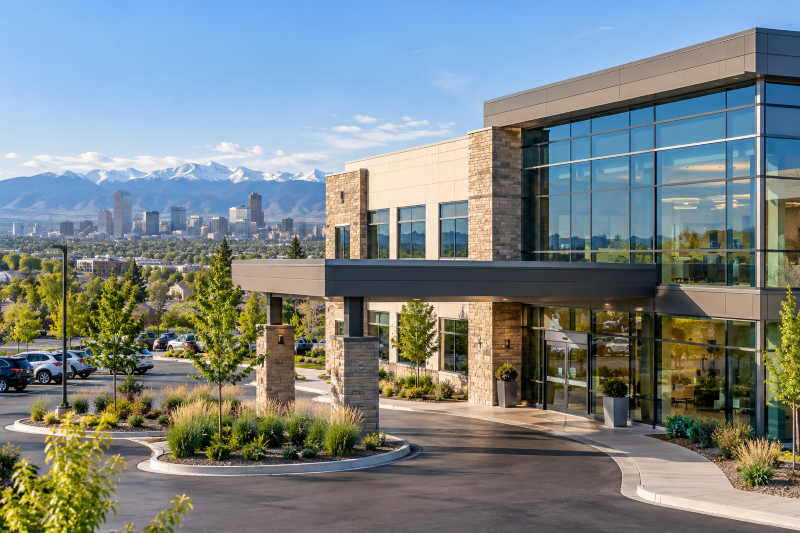
Denver’s medical outpatient market continues to tighten even as the region’s conventional office sector struggles with elevated vacancy, underscoring the different fundamentals driving healthcare real estate.
Medical outpatient direct vacancy across metro Denver fell to 5.3% during the first half of 2026, down 40 basis points from year-end 2025. By comparison, total Denver office vacancy stood at 28.7% in the second quarter.
The medical market also recorded 298,000 square feet of positive net absorption during the first half, exceeding the total recorded in any full year since 2022. At the same time, two projects totaling 237,000 square feet were delivered, marking the largest half-year delivery volume in more than five years.
Despite those additions, the development pipeline has thinned considerably. As of midyear, only one medical outpatient project remained under development: AdventHealth’s 88,000-square-foot Aurora Highlands facility.
That limited pipeline could keep competition elevated for well-located, move-in-ready medical space, particularly in submarkets where health systems and specialty practices continue to expand closer to population growth.
Average direct asking rent for Denver medical outpatient space was $32.68 per square foot on a full-service gross basis, down 3.7% from year-end 2025. But the decline does not necessarily signal broad tenant leverage. Built-out medical suites near hospital campuses can still lease quickly because the cost and complexity of converting standard office space for clinical uses remain significant.
Healthcare providers often require infrastructure that conventional office buildings were not designed to accommodate, including enhanced plumbing, electrical capacity, HVAC, imaging requirements and specialized build-outs. Those constraints help explain why Denver’s large inventory of vacant traditional office space has not translated into equally abundant medical-office options.
Demand is also being supported by continued health-system investment across the Front Range. UCHealth recently opened a 130,000-square-foot specialty, surgical and outpatient building at its Highlands Ranch campus, while AdventHealth has continued expanding its outpatient footprint in Aurora and Castle Rock.
For medical practices evaluating renewals or relocations, the market dynamics suggest that waiting for Denver’s broader office weakness to create significantly better healthcare-space options may be risky.
The contrast is increasingly clear: Denver has plenty of vacant office space, but comparatively little vacant space that is already configured—or economically practical—to support medical use.
For investors and landlords, that divergence also reinforces the defensive characteristics of medical outpatient real estate. While general office properties continue to contend with structural vacancy, Denver’s medical buildings are benefiting from population growth, health-system expansion and a relatively shallow new-development pipeline.
Source: Tower Realty Partners
For more information contact us:
954.346.8200 x 201