Vanderbilt Innovation Neighborhood Could Bring 6.1M SF Of Development To Nashville
Vanderbilt University has received final Metro Council approval for a sweeping Innovation Neighborhood planned along the western edge of its Nashville campus, clearing the way for a long-term mixed-use district that could ultimately accommodate approximately 6.1 million square feet of development.
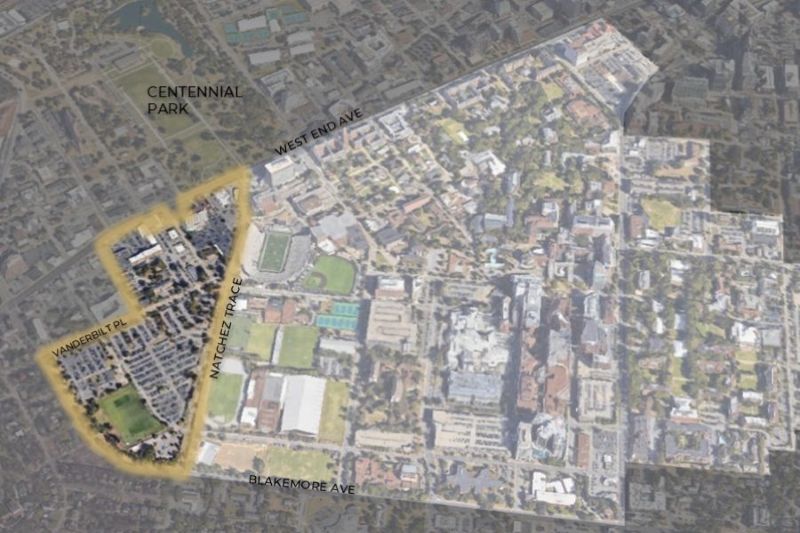
Metro Council approved the Specific Plan on third reading Sept. 1. The development area encompasses roughly 40 acres adjacent to Vanderbilt and is envisioned as a hub for research, entrepreneurship, corporate partnerships and technology-driven industries.
Vanderbilt says the district is intended to bring researchers, startups, established companies, investors and other organizations into closer proximity to the university. Health is among the industry sectors identified for the neighborhood, along with mobility, defense, music and entertainment and other technology-enabled fields.
The approved plan allows approximately 6.1 million square feet of development, compared with roughly 5.4 million square feet permitted under existing zoning. The project is expected to include a mix of research and innovation facilities, office space, housing, retail, restaurants, hotel uses and public open space.
Development is expected to occur in phases over roughly 20 to 30 years, with four or five major phases anticipated. Vanderbilt has said the first phase will focus on the area near Natchez Trace and Vanderbilt Place, across from the university’s football stadium. Construction on that phase is not expected to begin for approximately 18 to 24 months.
The plan also calls for substantial changes to the site’s public realm, including an estimated 300% increase in green and public space, approximately 1.7 miles of new or improved sidewalks and 1.3 miles of new bikeways. Vanderbilt has also committed to increasing the site’s tree canopy and conducting updated transportation and parking studies as major phases move forward.
For Nashville’s healthcare and life sciences real estate market, the project is notable because of its proximity to Vanderbilt’s research infrastructure and the broader healthcare ecosystem surrounding the university. Rather than functioning solely as another mixed-use district, the Innovation Neighborhood is being positioned as a place where university research can connect directly with private-sector companies, startups and investment capital.
That could make the district an important long-term location for healthcare research, life sciences, medical technology and other innovation-focused users as Nashville continues to expand beyond its traditional role as a headquarters and hospital-management center.
For more information contact us:
954.346.8200 x 201