
Posts

Look Who’s Investing In Healthcare

Commercial real estate has been in a whirlwind.

Industrial properties are incredibly hot—and expensive with subterranean cap rates. Multifamily is nearly as in demand, but many keep wondering if the end of federal Covid unemployment assistance combined with significant unemployment and the Delta variant could pull a rug out from under the sector.

You could look at the office and wonder when companies will be fully back; retail and remember e-commerce continues to grow; self-storage and ask when demand could max out; or you could look for a different investment prescription.

Medical real estate has a lot going for it: an economic sector that represents 17.7% of U.S. GDP, tenants with high credit and financial strength, and a customer base for which services are a literal matter of life and death.

“There’s always been investors with a healthcare strategy,” Andrew Twito, vice president of capital markets at Ryan Companies, says. “In the last 12 to 18 months, essentially every type of investor has been evaluating the sector. What they’re finding now is it’s an attractive place to deploy capital because it’s a defensive sector during a recession. People still get sick, they still have to go to the hospital, and they still have to get treated.”

Medical also means following big changes in healthcare delivery and structures and facing popular distrust in skilled nursing and elder care segments. Opportunity, for those who want to jump in, needs some preparation and a reexamination of the landscape.

Transformation Of The Medical Office

“Medical office is doing well,” Bo Stuart, a senior associate at Transwestern’s Southeast healthcare advisory services team, tells GlobeSt.com. “It started coming out of the pandemic earlier than certain product types and there was less uncertainty.”

The cap rates are relatively good compared to, say, threes in industrial.

“I’ve seen anywhere from stuff in the fours to a lot of stuff in the fives,” says Ben Reinberg, founder and CEO of Alliance Consolidated Group of Companies. “You have short term leases that trade in the sixes and sevens.”

Investment rewards are nothing new to those with experience investing in the sector. John Wilson, president of HSA PrimeCare, points out that the medical office building, or MOB, sector performed well in the financial crisis of 2008 through 2012.

“It not only remains strong, but I think the pandemic has accelerated the growth and number of investors and it’s brought new capital because of some of the fundamentals of the space, comparing it to general office,” Wilson says. “General office is still facing the uncertainty of employees coming back, when they’re going to come back, how many are going to come back. Medical office shows more clarity in long-term demand.”

This hasn’t been a surprise to those like Robert Atkins, a principal at Atkins Companies, whose multigenerational family firm, with 700,000 square feet of medical office space, was in MOB “way before it was considered a separate asset class.”

“Having a lot of different asset classes through the years, residential, retail, general office, we decided years ago to focus almost exclusively on medical office,” Atkins says. “We believed it was one of the most attractive and stable asset classes in our experience through the various peaks and valleys of the real estate market.”

However, for all the benefits, this isn’t a market to nonchalantly enter.

“Healthcare is a very complex industry,” says Alfonzo Leon, CIO, Global Medical REIT, who has been in the space since 2005. “The thing that always stood out for me when I compared it to apartments or office or retail, it takes a long time to make sense of the healthcare landscape. Apartments are pretty straightforward, with a lot of demographic analysis. In healthcare, you also have demographic analysis, but it’s more complex. There are relationships between hospitals and physicians, payment issues, a lot of regional stuff, each city has its own dynamic and history. Then you get into the insurance companies. I felt like it took me five years to feel I understood what I was looking at and what the risks were.”

For example, demographics will direct which types of practices will thrive in specific areas. As the dynamics of the relationships change, so do the fundamentals of associated real estate investment.

“If you go back 20 or 25 years, you had mom and pop practices,” says Wilson. That is increasingly rare.

Atkins has watched the evolution of single practitioners getting swallowed up by larger medical practices or hospitals.

“It’s almost impossible now for a young doctor to come out and hang his shingle,” Atkins says, because the economics are unfeasible with student debt, insurance, and the cost to buy or establish a new practice. “The only single practitioners and single groups you see are the old timers finishing out their careers and who don’t want to get involved with the larger groups.”

Where once the primary tenants for medical offices were small practices, now it’s large-scale medical systems, hospitals, and private equity groups acquiring specialty practices.

“We’re in North Jersey in Essex county,” Atkins says. “Our home office is in the building but we’re the only non-medical office.” The tenant next door was an oral surgery group of four doctors, with multiple locations, reaching retirement. “They sold out to a younger oral surgeon, an aggressive guy buying a bunch of these practices, and he just re-upped on a new 10-year lease. This group of doctors had a strong reputation.” The young doctor wanted to keep it.

But such examples are minor compared to the larger healthcare industry forces at work, which are visible in both leasing and construction.

New Developments And Leasing

“There’s a backlog of projects,” says Doug King, national healthcare sector leader at Project Management Advisors. “Healthcare, there’s a backlog of projects that were probably already on their radar.” “What clients are building are the outpatient or ambulatory care facilities being planted in neighborhoods in urban areas. They’re outpatient services, but also have diagnostics or treatments that are fairly sophisticated. There’s a fair amount of money out there for community health and public health.”

There are even moves to have some overnight beds.

“They’re allowing observation beds in some areas so you’re able to do them in a lower cost structure and keep the patient safe,” says William Colgan, a managing partner at CHA Partners.

The same pattern appears in leasing, as large organizations set up treatment centers that are far less expensive to run than traditional hospitals but with enough resources to provide more expansive care than clinics.

“You see money migrating to those types of facilities,” Colgan says. “Smaller types of office buildings are less attractive. The larger, consolidated healthcare services under one roof for convenience is where you find money chasing. What used to happen in healthcare, every doc was an entrepreneur. We have a whole new generation of docs that are all employees.”

The change in healthcare delivery—due largely because of the complexities and realities of much more “risk-based reimbursement” of providers, as Colgan notes—has changed what potential tenants want in buildings.

“The old-style medical office building had small suites,” says Mindy Berman, senior managing director and co-head of JLL’s healthcare capital markets group. “Some of them are in good real estate locations and will be adapted, not that hard. These newer models need more infrastructure.” Heavier equipment requires more floor load and power.

Even the number of columns, column spacing, and floor to ceiling height become important.

“If you get an eight or eight-and-a-half foot ceiling, it’s somewhat confining,” HSA PrimeCare’s Wilson says.

More space also reduces the anxiety levels of patients, improving the experience and presumably making them more likely to come back rather than to choose another facility.

Skilled Nursing And Senior Care

There are long-term forces at work in skilled nursing and senior care as well, but also shorter-term reactions to pandemic experiences. Think of all the stories about nursing home residents dying from Covid-19.

“Every two to six weeks you see a New York Times story about nursing homes,” says Don Husi, a managing director of privately-held investment bank Ziegler, which does a lot of work in healthcare and senior living. “There’s a group of people out there doing their best to give our industry a bad name without outlining the good things we’re doing.”

Husi and some others in that part of the industry thought that ultimately the criticism was forced and ignored the origins of the problems.

“No one knew where the numbers were going to go, and you can’t discharge somebody out of a hospital to nowhere,” Colgan says. “If you receive them from a nursing home, where do you discharge them to? The governor’s mandating you send people back to free up beds. No one knew how long these people could infect other residents. The most vulnerable people were the ones affected by covid and we cohort the most vulnerable into one facility. It’s unclear whether things would have been as bad if the people had been dispersed and not concentrated.

The impact on the segment was sharp and difficult. Colgan pointed to the State of New Jersey considering a requirement that everyone had to be in a private room.

“If investing in a large nursing home and 70% of the beds are two to a room—these are Medicaid patients—think about the amount of revenue they’ll lose if they’re in private rooms,” Colgan says. Then there were discussions of a 100% air exchange. “Could you imagine taking 10-degree temperature air and having to heat it to 72 to make it comfortable for a senior? The amount of energy you need is through the roof.”

Investors took notice.

“Generally, what you’ve seen from the REIT market is repositioning their portfolios to position themselves for growth in a post-Covid world, if there is such a thing,” Husi says. “You look at HealthPeak, who sold off all their independent living portfolio. But they like for-profit entrance fee communities.”

While the criticisms and potential for additional expenses, with resulting lower margins, was one reason, there was another.

“If you’re a publicly-traded REIT, just speaking to that market, it was an opportunity or excuse to reposition your assets and look to the future,” says Husi. “If we get through the next 24 months, our senior housing and care industry is going to do very well just because of demographics and the lack of new properties coming online. Pre-covid, we were overbuilt. There will be less overbuilding because it’s more difficult to get a construction loan for senior living. There are new buildings going up, but it’s at a much slower pace than pre-covid.”

There are also other challenges for skilled nursing and senior living. Labor shortages are causing issues.

“I think medical office buildings right now look attractive more so than skilled nursing facilities,” Iman Brivanlou, managing director of high-income equities at TCW and the TCW Global Real Estate Fund, tells GlobeSt.com. “Those, especially the operators there, are being decimated by labor costs. They’re dealing with operational pressures that are going to be more pronounced than people think. Senior housing is catching a little improvement because occupancies are increasing.”

But with problems and resultant falling values come those that want some bargains while they still last.

“For the first time I’m starting to hear different kinds of groups—that would be large private equity, REITs, large family offices, strategic investors in seniors housing— talking about wanting to make large portfolio and platform acquisitions again after taking a long pause,” Ted Flagg, senior managing director and co-head of JLL’s healthcare capital markets group, tells GlobeSt.com about communications starting in late summer. “I’m hearing that from enough smart money that something interesting must be happening out there to cause that.”

“We’ve seen real increases starting around April through August and September, with August being a real kick up even from the average occupancy pickups of April through mid-summer and July,” Flagg adds.

He sees performance for senior care and skilled nursing as taking a turn toward the positive over the last quarter or so. There are also expectations of a cyclical bull market, given baby boomer demographic waves coming and the reduction of supply during the pandemic.

“I think there is no doubt from most smart money that the next five years are going to be significantly up in terms of NOI, pricing, occupancy, and everything else,” Flagg says. “The real question is around what the time and what is the pace of that increase. Is it next year, two years from now, today? People are thinking in terms of the right entry point. Strategic players are starting to come to the table and what’s available in terms of reasonable acquisitions today.”

In other words, 2022 has the potential for being an inflection point and possibly a time to buy into these asset types, just as values are tipping toward a rise. Or it could be too early.

It’s just another way that healthcare might tempt and then taunt CRE in 2022. There’s medical office space going through transitions, with those trying to jump on having to negotiate a steep learning curve. Then skilled nursing and senior living make a comeback … at some point.

But, more importantly, there’s a sector that’s been an alternative to other CRE types for years. One where there are longer-term leases, clientele that can’t just shrug off getting services, providers that are long-term with great credit, and an industry that’s closing in on almost a fifth of the GDP of the largest economy currently in the world.

Nothing is guaranteed or easy but making good investments in medical real estate seems like a good treatment plan for lower alternative yields. Who’s investing in medical CRE? Maybe the answer should be you.


Source: GlobeSt

Sila Zeros In On Healthcare With $1.3B Data Center Portfolio Sale

With the sale of a 29-property data center portfolio, Sila Realty Trust is exiting the data center space to focus on healthcare.

Sila sold 29 data center properties to Mapletree Industrial Trust, a REIT listed on the Singapore Exchange, for $1.3 billion. The transaction will be completed in one or more closings during Q3 2021.

“This action marks another key step in Sila Realty Trust’s evolution to provide a clear path for the company to pursue a strategy as a pure-play healthcare REIT,” said Michael A. Seton, Sila CEO and president in a prepared statement.

Sila Realty Trust, previously known as Carter Validus Mission Critical REIT II, owned both data centers and healthcare assets before the sale.

As one example of the type of assets it seeks, last September Sila purchased Tampa Healthcare Facility, a 33,822 rentable square foot medical office building constructed in 2015. The building is located on 2.87 acres in Tampa, the second-fastest growing market in Florida and the twelfth-fastest growing market in the US. The facility, which was 100% net-leased to six tenants at the time of the sale, serves as a strategic location for both primary and urgent care, pediatric spinal care, clinical laboratory services and various types of outpatient surgery.

In the release announcing the sale, Seton said the company was focused on acquiring high-quality, well-located assets with a strong and diverse tenant roster.

“All of these attributes are indicative of our existing portfolio combination and we expect this property will serve as a strong complement to our growing asset base,” Seton said at the time.

It shouldn’t be a surprise that Sila is focusing on the medical sector. It has held up exceptionally well through the pandemic. While medical office buildings sales volume declined in 2020, it was much less of a drop than the other commercial real estate sectors, according to a report from Colliers.

MOB investment decreased 12.2% year-over-year in 2020 to hit $11.1 billion, according to Colliers, while cap rates fell 20 basis points to 6.5%. By comparison, commercial real estate posted a 32% decline in sales volume overall.


Source: GlobeSt.

Riding The Wave Of Surging MOB Demand

In a country where over 10,000 people turn 65 daily, it’s safe to say that an aging population will drive the demand for healthcare resources for years to come.

Healthcare Trust of America (NYSE:HTA) is a real estate investment trust that seeks to not only ride the irresistible wave of current demographic trends, but also aims to carve out strong footholds in markets where high tenant quality can be secured and leveraged to more profitable relationships. As the largest dedicated owner/operator of medical office buildings (MOB’s) in the U.S.,

HTA is also well-positioned to benefit from the broad shift away from expensive inpatient facilities, and instead toward more cost-effective outpatient resources, as healthcare spending already projects to account for fully 20% of GDP by 2026.

HTA currently has lots of competition in the medical property space (not just from other REIT’s either) as the sector is one of the few areas where growth is almost guaranteed to exceed nominal GDP growth for years to come. This has pushed the price of related real estate assets sky high, and has been something of a double-edged sword, because profitability on leases takes a bit of a hit as profit margins are eaten away by the rising cost of asset purchases. Fortunately, HTA‘s focus on specific markets with strong demographic dynamics, its fully-integrated property development capabilities, and prudent cost management have all combined to insulate profits somewhat more than peers. Past is not necessarily prologue, however, and challenges from interest rate volatility to changing investor sentiment and MOB demand can affect spreads, margins, and FFO numbers. With respect to HTA, I’ll look at the company’s structure, competitive position, real estate portfolio, financial strength, and underlying fundamentals of the stock to help current and prospective investors assess whether HTA is a buy at current prices, and what the long-term outlook is for the company and the stock.

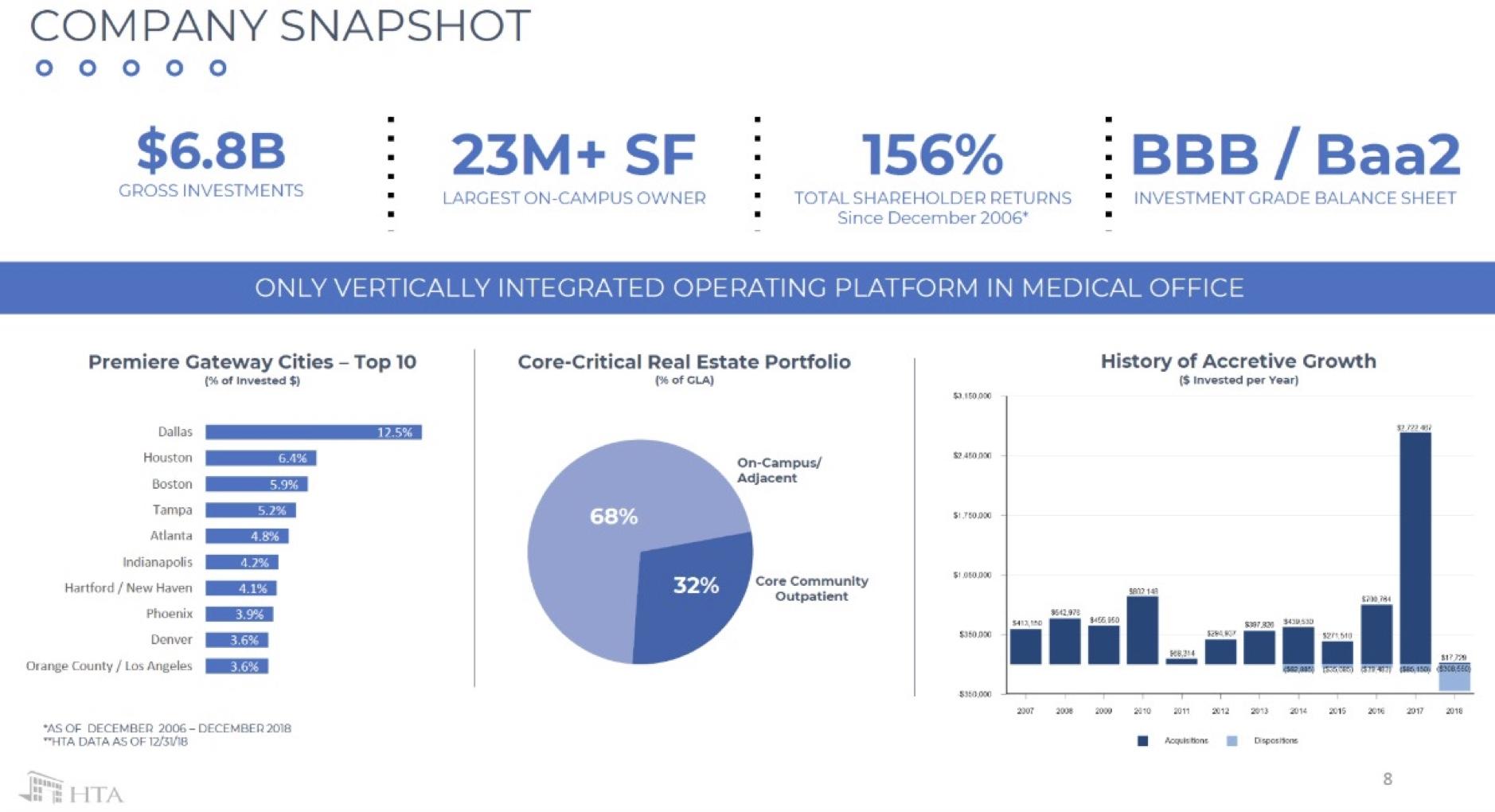
HTA company snapshot(Image source: HTA 2018 annual report)

Finding its Niche

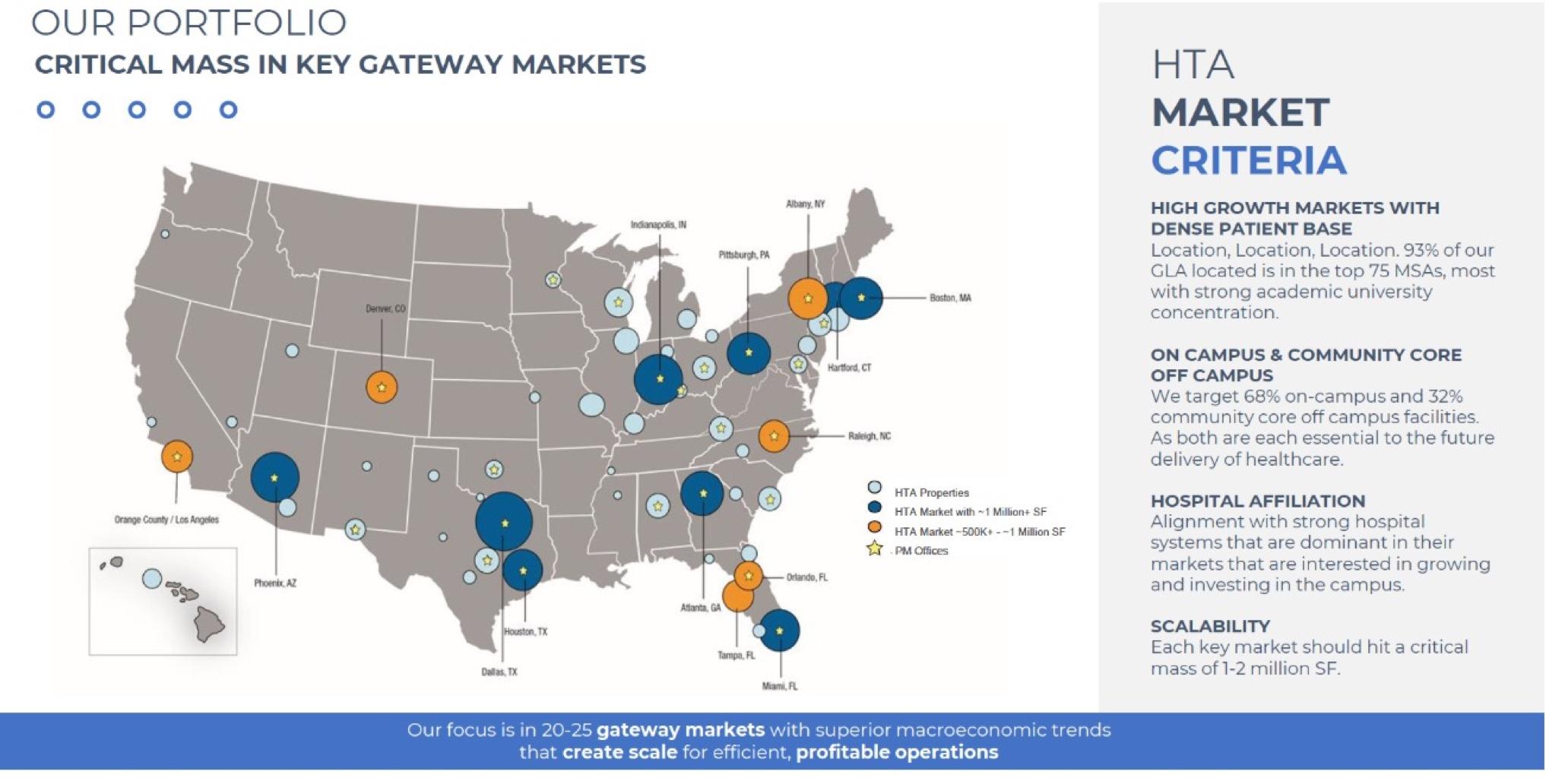
As the single largest owner of MOB’s in the U.S., HTA‘s real estate portfolio comprises 23 million sq. feet of GLA (gross leasable area), having invested roughly $6.8 billion in those properties over the last 10 years. While the firm has considerable market breadth across the country, it does try to focus on 20-25 “gateway markets” where it seeks to “build critical mass,” especially in communities with universities and large extant medical institutions. The thinking is that this strategy presents not only favorable demographic trends for local demand, but also supply in the form of skilled-labor and job growth. Consequently, the company has already started to see some of the benefits via robust long-term demand for medical office management and leasing services. Overall, the firm has an integrated asset management model consisting of on-site leasing, property management, engineering and building services, and targeted real estate development. With a focus on operational efficiency and tenant quality, HTA has sought to build lasting relationships with dependable clients, and achieve real rental growth. Management hopes this combination will lead to peer-beating value-creation in the long-run.

HTA portfolio map(Image source: HTA investor presentation)

Founded in 2006 as a private REIT, HTA went public on the NYSE in 2012. Headquartered in Scottsdale, AZ, the firm has quickly expanded as it has not only emerged from the depths of the real estate and financial crash of 2007-8, but benefited from the growth of healthcare in general, and its own target markets in particular. This concentration in a few key markets has allowed the company to build strong competitive positions within those communities, and has actually led to relatively strong operating margins. Further, management’s focus on the firm’s financial strength and liquidity has allowed for continued investment and development, leading to accretive acquisitions and leasing relationships. Those strong tenant relationships foster increased margins, higher tenant retention, better leasing spreads, and more and better growth opportunities.

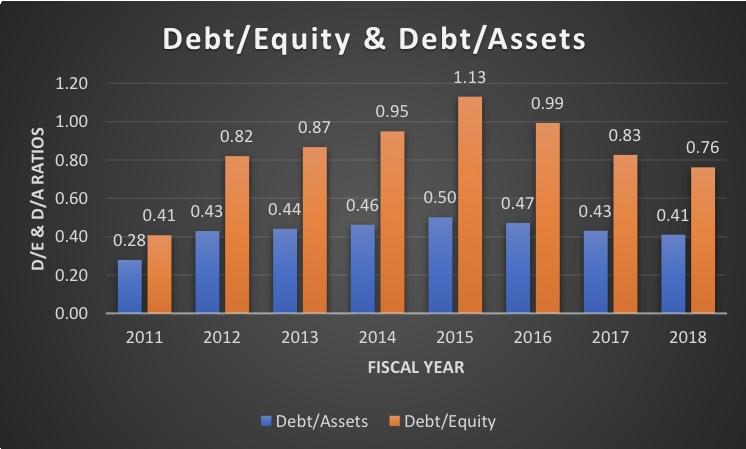
HTA d/a and d/e(Source: Author, Benjamin Black)

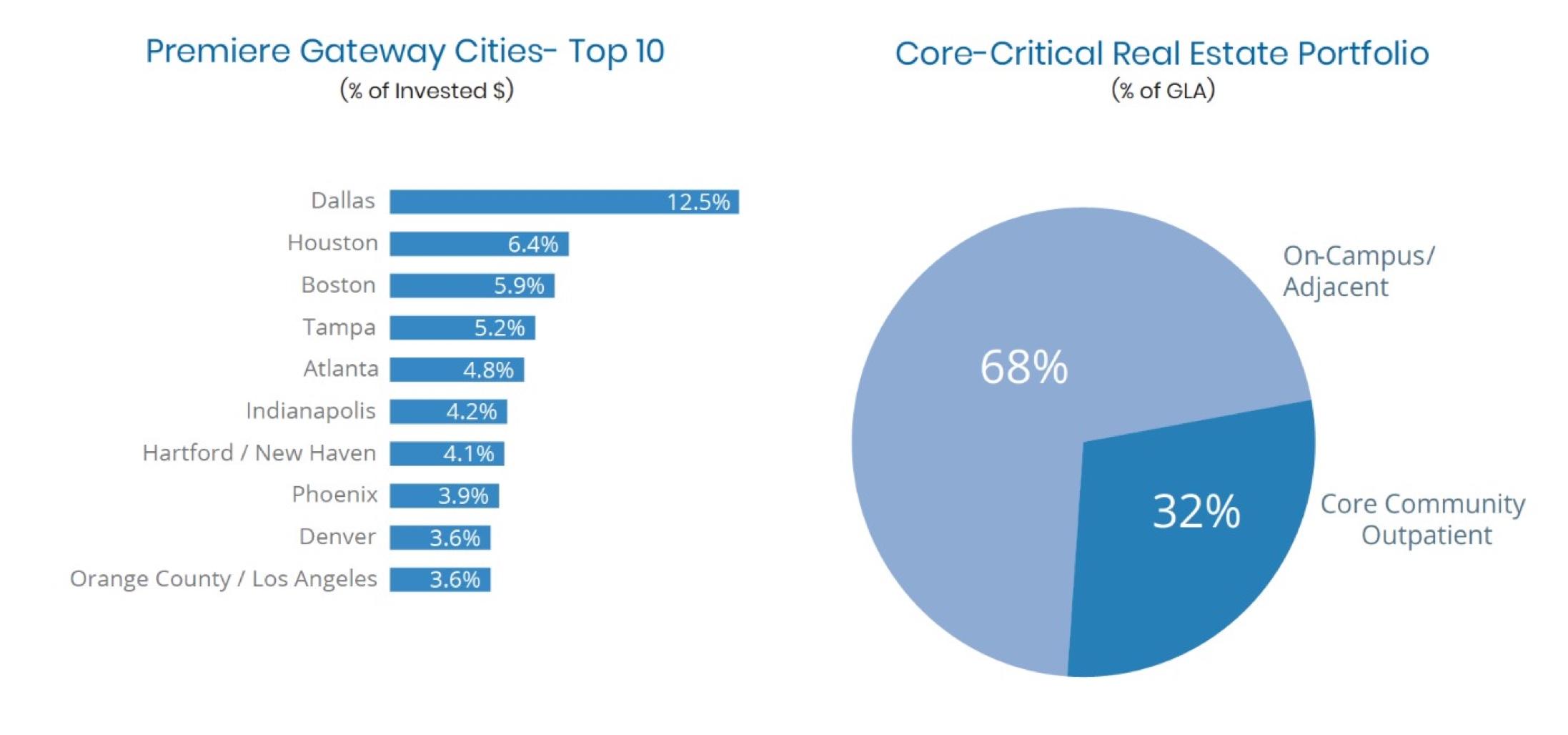
The operating platform consists of four main segments, including property management, maintenance services, leasing services, and construction & development. This multifaceted approach has allowed HTA to not only capitalize on leasing and property management fees, but also build its footprint through development and property investment. While 93% of the company’s overall GLA consists of in-house property, the top 20 markets comprise 75% of GLA as well, which is actually a 12% increase since 2013 (when it was 63%). What this shows, given HTA‘s ballooning real estate portfolio during this time period, is a strengthening position in the markets it chooses to focus on. The portfolio is increasingly concentrated in large and growing markets with high MOB demand, and top markets now include Dallas, Houston, and Boston, among other expanding metro areas with favorable demographics. Specifically, HTA targets strong same property cash NOI growth.

HTA portfolio(Image source: HTA investor presentation)

Growing the Portfolio

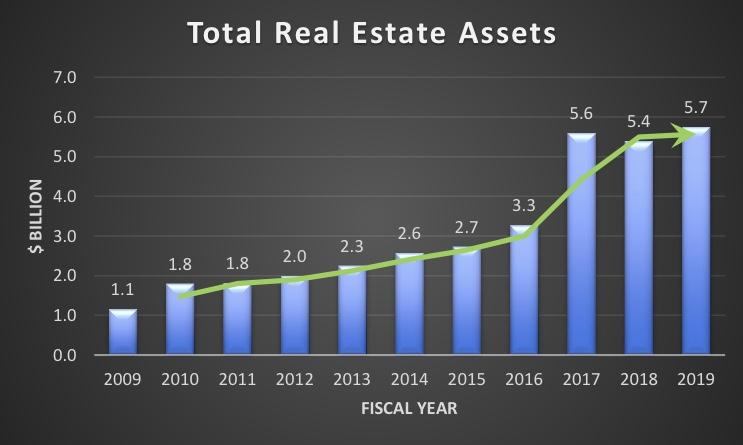
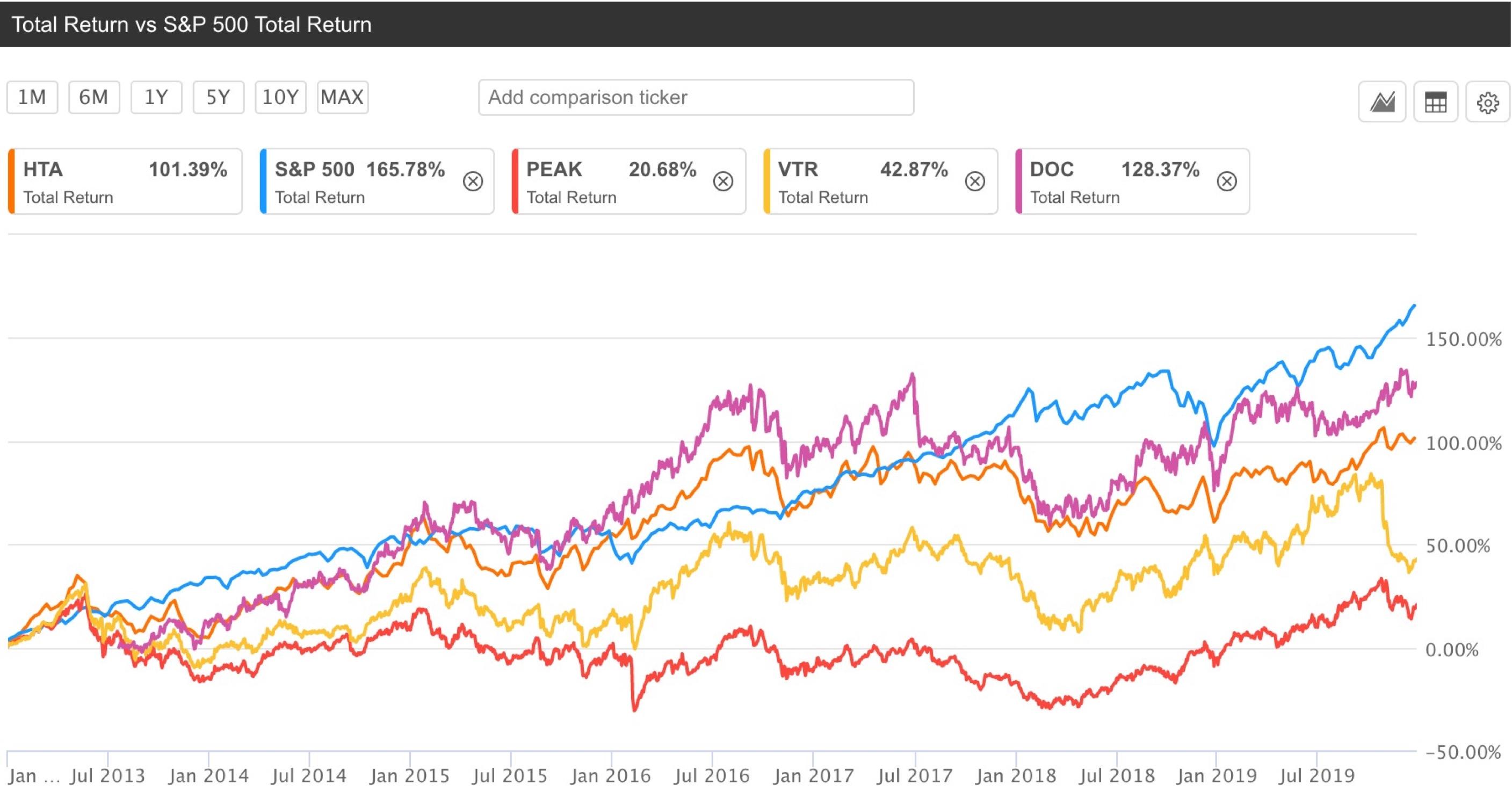
Since the end of 2013, HTA has doubled its portfolio in terms of GLA and property value (from $2.6 billion to $5.4 billion). Over this same period, leverage (net debt/EBITDAre) has remained fairly steady at a rate between 5 and 6X, falling at a respectable 5.8X in 2018. Cash from operations and use of the firm’s ATM equity program have largely financed the acquisitions. Solid enterprise value growth and normalized FFO growth of 27% (through 2018) help underscore the merits of a strategic focus on core-community, on-campus, and academic medical center locations. The economics and demographics of university-heavy cities favors MOB demand and related pricing. What sets HTA apart from peers is its vertically-integrated operating platform allowing it somewhat of a unique offering to customers. This has translated to success for investors in the underlying stock, as the REIT has outperformed not only broader REIT indices, but also the healthcare REIT index as well. Of course, this underlying performance does include some years as a private REIT, where returns are calculated mainly by factoring in total distributions over the period, but regardless, the 156% total return since ’06 compares favorably (bear in mind the period begins right around the height of the real estate bubble).

HTA real estate assets(Source: Author, Benjamin Black)

Healthcare delivery is expected to shift to more outpatient facilities over time due to it being more cost-effective than inpatient care. Additionally, limitations to existing hospital resources have further enhanced outpatient visit growth. In fact, inpatient visits have begun to decline in recent years, despite the growing demand for healthcare overall, which is especially beneficial to MOB operators. While demographic and industry dynamics favor the MOB REIT sector generally, HTA‘s laser-like focus on key “gateway” markets further drives growth and profitability. In addition to this, the consolidation of healthcare providers will likely lead to increased opportunities for MOB operators with scale (such as HTA).

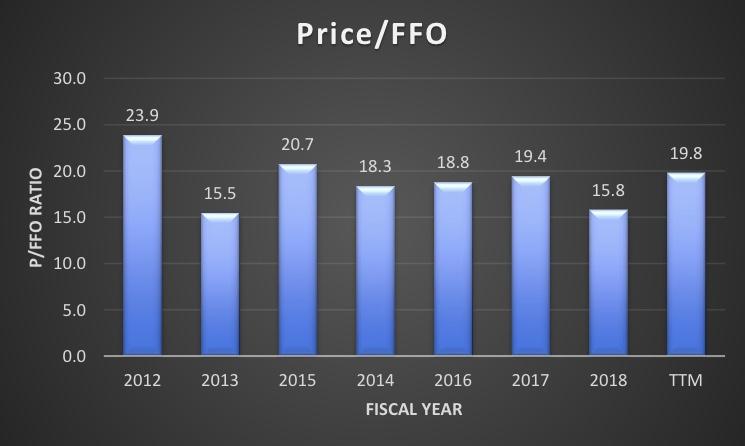
HTA P/FFO(Source: Author, Benjamin Black)

MOB’s are desirable to providers because they help augment provider growth by helping to limit capital outlay/commitments by providing leasable properties, and also limit the volatility of cash-flows. The ability to develop synergistic and profitable relationships with strong providers depends greatly on location, barriers to entry, and operational efficiency of both the leaseholder and the property manager. That said, the MOB sector is especially fragmented, as less than 20% of the market is institutionally owned. Further, REIT’s only have an 11% share of the MOB market, which is less than private equity, developers, and providers themselves. Of that relatively small slice of the pie, however, HTA is fast becoming a dominant player.

Competitive Position

From 2012-2018, annualized FFO growth of 4.6% matches that of Welltower (NYSE:WELL), and is above peers H&R REIT (OTCPK:HRUFF) (3.3%), Ventas Inc., (NYSE:VTR) (1.2%), and Healthpeak Properties (NYSE:PEAK) (-1.7%). Same-property cash NOI growth, which I’ll refer to as SS (similar to same-store growth in retail), averaged 3% from 2013-2018, bested only by HRUFF (3.2%), and ahead of Physicians Realty Trust (NYSE:DOC) (2.6%), WELL (2.3%), VTR (1.4%), and PEAK (1.3%). Total shareholder returns meanwhile, have outpaced them all, coming in at 68% over the period (vs. a range of -6% to 54% for the previously mentioned companies).

MOB REIT returns(Image source: SEEKING ALPHA HTA STOCK PAGE)

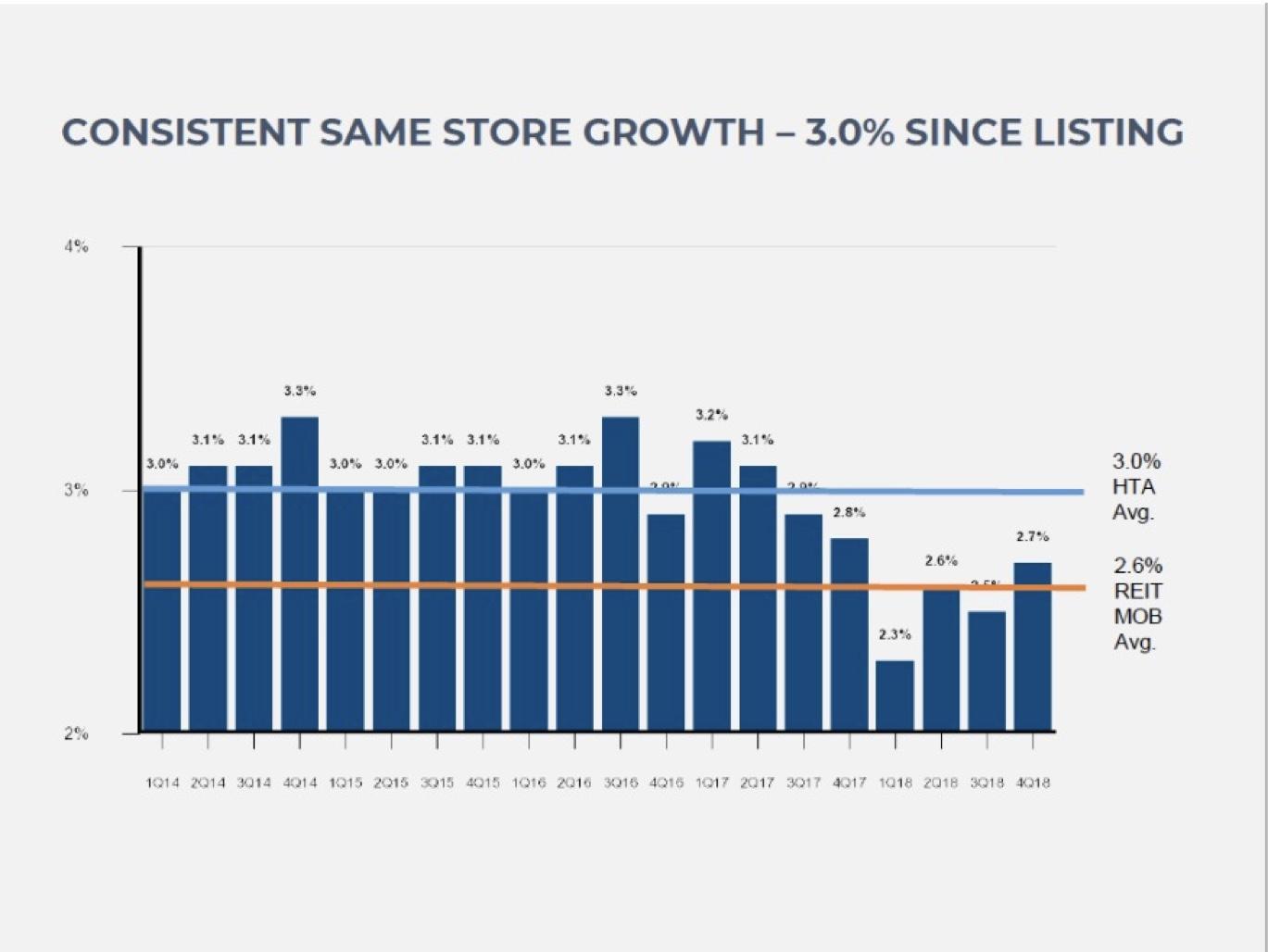
PEAK (formerly HCP) in particular, has struggled over the last 5-6 years, and HTA may stand to benefit as a result. Note that in 2 of the last 4 quarters, SS growth fell below the REIT MOB average of 2.6%. Prior to that, from 2014-17, HTA grew cash NOI at a range between 2.8-3.3%. It has hit a low of 2.3% in 1Q18, but has since recovered to 2.7% as of 4Q18. The good news, however, is that since 2014, SS expenses for the company have actually declined, averaging -0.8% vs. an average of +0.9 to 3.4% for peers (including WELL, VTR, HCP, DOC, and HRUFF), which collectively averaged 1.75%. This disparity shows HTA‘s greater efficiency and cost management than peers. So, over the last 5-6 years overall, same-property figures look healthy, but keep an eye on the trend, and take special note of any further deterioration in NOI growth rates, or rising same-property expenses.

HTA SS-NOI growth(Image source: HTA investor presentation)

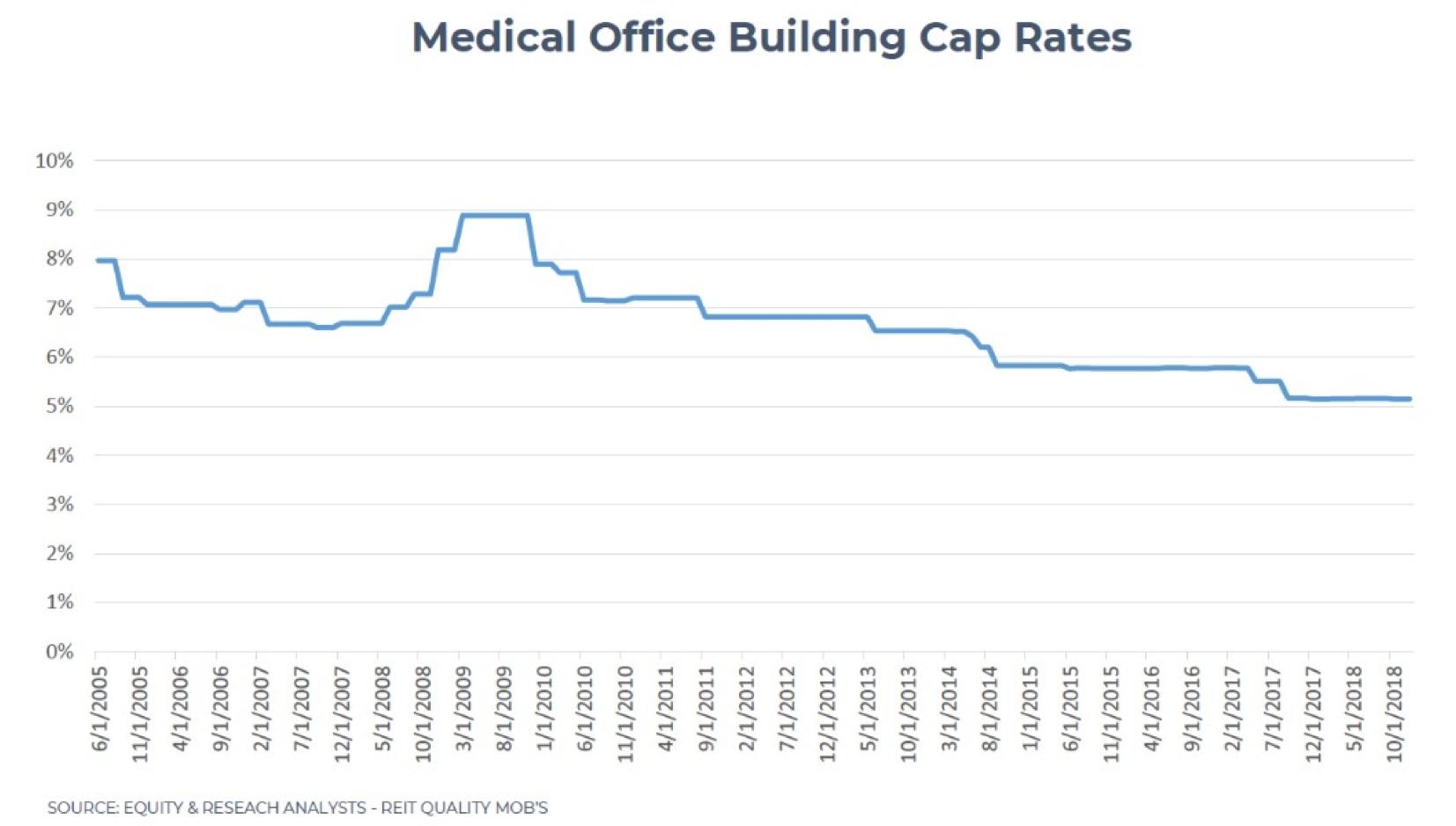
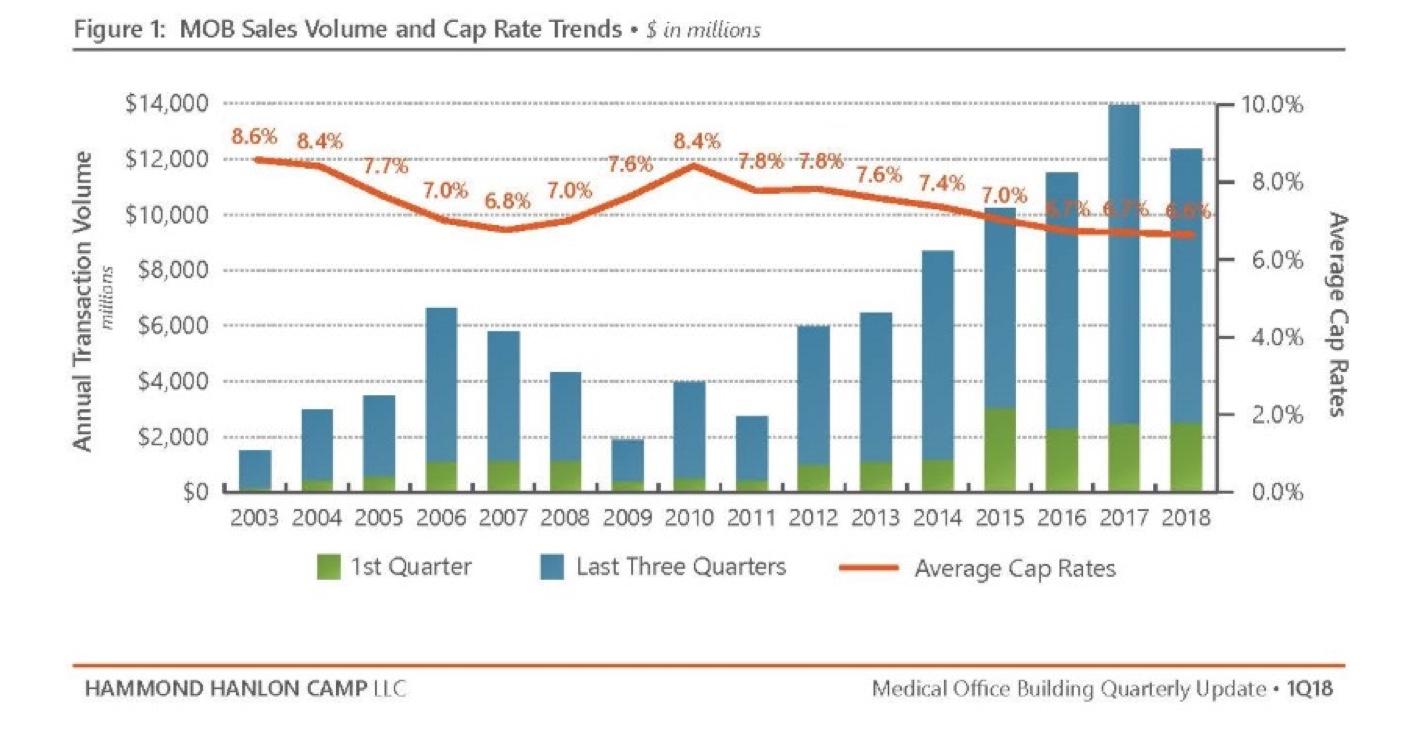
It’s important to note that the MOB sector (and healthcare real estate investment generally), is currently experiencing a period of record low cap rates. Cap (capitalization) rates are the ratio of net operating income (NOI) to property asset value, and such rates have fallen in recent years due to high investor demand and fast-rising property values. One major reason for this trend is that health-related real estate is seen as a sector of fairly reliable growth; in fact, total number of outpatient visits has grown by almost 2% annually between 1994-2014. By comparison, over the same period, inpatient admissions actually declined by 0.67% annually.

HTA EV/EBITDA(Source: Author, Benjamin Black)

Investor demand remains at an all-time high for healthcare real estate assets, and especially MOB’s, consequently pushing down cap rates and therefore profit margins and ROI expectations. Because healthcare is seen as one of the strongest drivers of economic growth in the U.S. going forward, investors continue to position their portfolios to reflect that trend. Total healthcare real estate volumes, though, stayed roughly the same for 2019 as 2018, mostly due to the lack of available properties, presenting an opportunity for profitable MOB development in key markets where demand is particularly robust.

And the Survey Says…

In a survey of medical real estate investors, CBRE showed that 94% of respondents favored MOB’s for acquisition, by far the highest of any building type (ambulatory surgery centers (ASC’s) were 2nd at 69%, for some perspective). These results further underscore the high continued demand for MOB’s, and the resultant tight supply-demand and pricing environment. Expected cap rates for MOB’s in 2019 are between 5-6%, which represents the lowest cap rates for all medical building/real estate investment categories, including ASC’s, wellness centers, LTC hospitals, rehab hospitals, etc. Only 2% of survey respondents felt that 2019 would see lower investor demand for MOB’s than 2018, and only 1% of respondents said that occupancy rates of their MOB portfolio had fallen from the prior year (99% said it was the same or higher). Generally, survey results show that the bulk of those asked see annual growth for medical office lease rents falling between 2-3%, largely reflective of inflation expectations and GDP growth.

Cap rates

MOB cap rates(Source for the above two images: HTA investor presentation and Hammond Hanlon Camp LLC 2018 MOB report, attached at the end of the article)

In 2018, the “tightening of the spread between sales and development capitalization rates (had) many developers on edge given the rising interest rate environment.” Fortunately, interest rates have actually fallen over the last year, as the Fed has lowered the Fed Funds Rate by 0.25% on three separate occasions in the TTM period. In the 24 months between the beginning of 2017 and the end of 2018, construction costs generally increased between 15-30% (depending on the market). Despite this surge, rental increases generally kept pace with rising construction costs, as the growing economy allowed developers to pass on rising costs. Additionally, cheap credit continues to augment market growth as loan-to-value ratios remain elevated at between 65-90%, and are increasingly occurring at the higher end of that range.

The Fundamental Picture

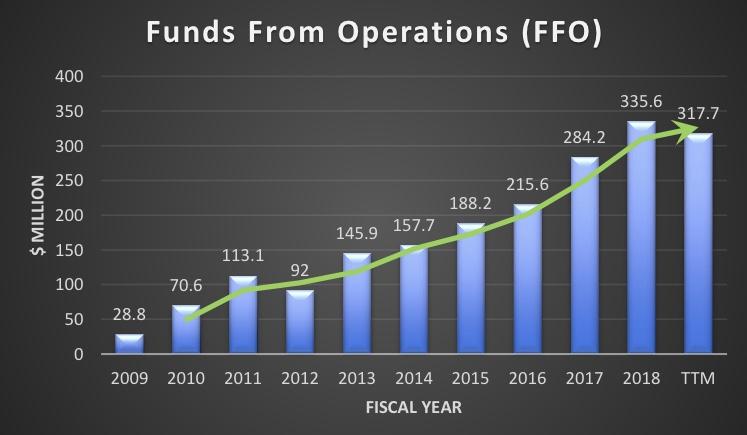
While the healthcare industry is clearly growing (average healthcare spending per person rose 11% in 2017 alone, for example), not all MOB operators are created equal, and not all markets are especially geared towards that sector’s growth. HTA with its university-centric market approach (it targets a portfolio composition of 68% of GLA from on-campus properties, and 32% off-campus), seems to have found a profitable niche. Growing its real estate assets from $1.7 billion to $5.7 billion from 2009-2019 (12.86% CAGR), HTA has greatly expanded its portfolio and simultaneously managed to grow its FFO from $28.8 million to $317.7 million, producing a CAGR of roughly 27%. Meanwhile, management has grown overall EBITDA from $61.3 million to $416.2 million (21.1% CAGR) over the same period.

HTA FFO(Source: Author, Benjamin Black)

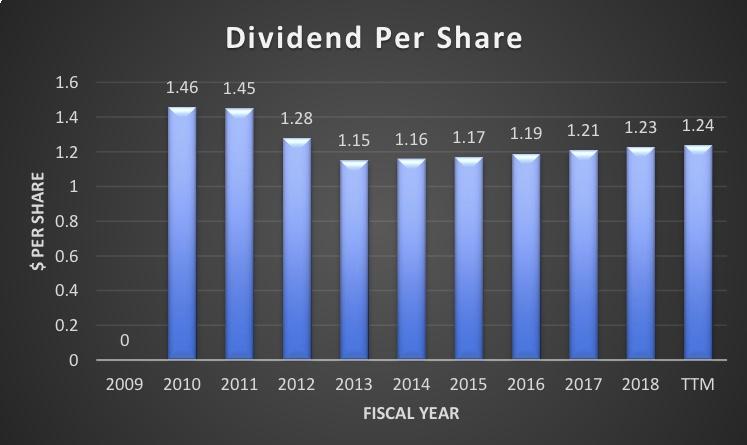
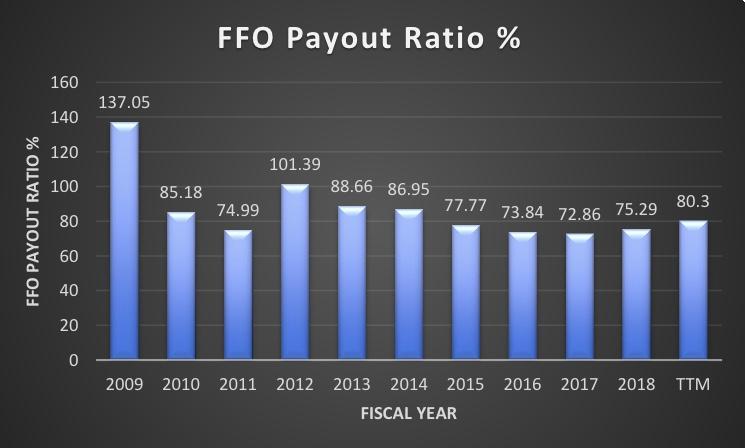
While the annual dividend was higher in 2010 at $1.46 per share (vs. $1.24 in the TTM period), the FFO payout % was also much higher, at over 85% (vs. roughly 80% today). Dividends have increased annually since 2013, but at a compound annual growth rate of only 1.26%. The P/FFO ratio is just under 20 (at 19.8), and is reasonable, if not a screaming bargain. Reflecting on these numbers, HTA‘s focus is expanding its competitive position, showing very impressive top-line growth, but due to historically low cap rates and exploding real estate costs, that is not necessarily translating to stellar profit and dividend growth.

HTA dividends

HTA FFO payout %(Source for the above two graphs: author)

The Bottom Line

While HTA is well-positioned as a leader in the healthcare REIT sector, shareholder returns will likely remain muted while asset prices and earnings multiples remain high (relative to historic norms). That said, this is a company to consider adding to your watchlist, as it is a best-of-breed operator in a growing sector of the economy in the long run. It’s a great company, but a so-so stock at the moment. If HTA were to fall 20-30% over the next few months, however, (or basically flat-line over the next 2-3 years),  a reasonable and profitable entry-point would present itself, but wait for the underlying fundamentals to catch up to the price first.

*Most market and company-specific data drawn from HTA’s 2018 annual report or most recent investor presentation, found on the company’s investor website. Data used to construct graphs drawn from Seeking Alpha’s HTA stock page.


Source: Seeking Alpha